
Your First 1,000 Followers Aren’t the Real Goal
Starting Instagram marketing can feel confusing.
In Instagram Marketing for Beginners,You create an account, upload a few posts, add some hashtags, and wait for people to discover you. But after a few days, you may start wondering: Why am I not getting followers? Why are my posts barely reaching anyone? What should I actually post?
The truth is, Instagram success is rarely about posting randomly and hoping something goes viral.
For beginners, the real goal is to understand who you want to reach, what you can offer them, and how to consistently create content that gives them a reason to follow you.
That is where a simple and practical approach to Instagram marketing for beginners can make a difference.
Introduction: What Is Instagram Marketing?
Instagram marketing is the process of using Instagram to build awareness, connect with an audience, promote products or services, generate leads, and support business growth.
It can include many activities, such as:
Creating useful or entertaining content
Growing an engaged audience
Using Instagram Stories and Reels
Building a recognizable brand
Responding to comments and messages
Collaborating with creators
Promoting products or services
Running Instagram advertising campaigns
Tracking content performance
You can begin your Instagram journey without having a big audience behind you.
A small account with the right audience can be more valuable than a large account filled with people who have no interest in what you offer.
For someone new to Instagram marketing for beginners, the most important thing is not trying to master everything at once. Start with the fundamentals, learn what works for your audience, and improve gradually.
Instagram Marketing for Beginners: Common Challenges
Instagram looks simple from the outside.
You take a picture, write a caption, publish it, and move on.
But effective marketing involves much more than pressing the “Post” button.
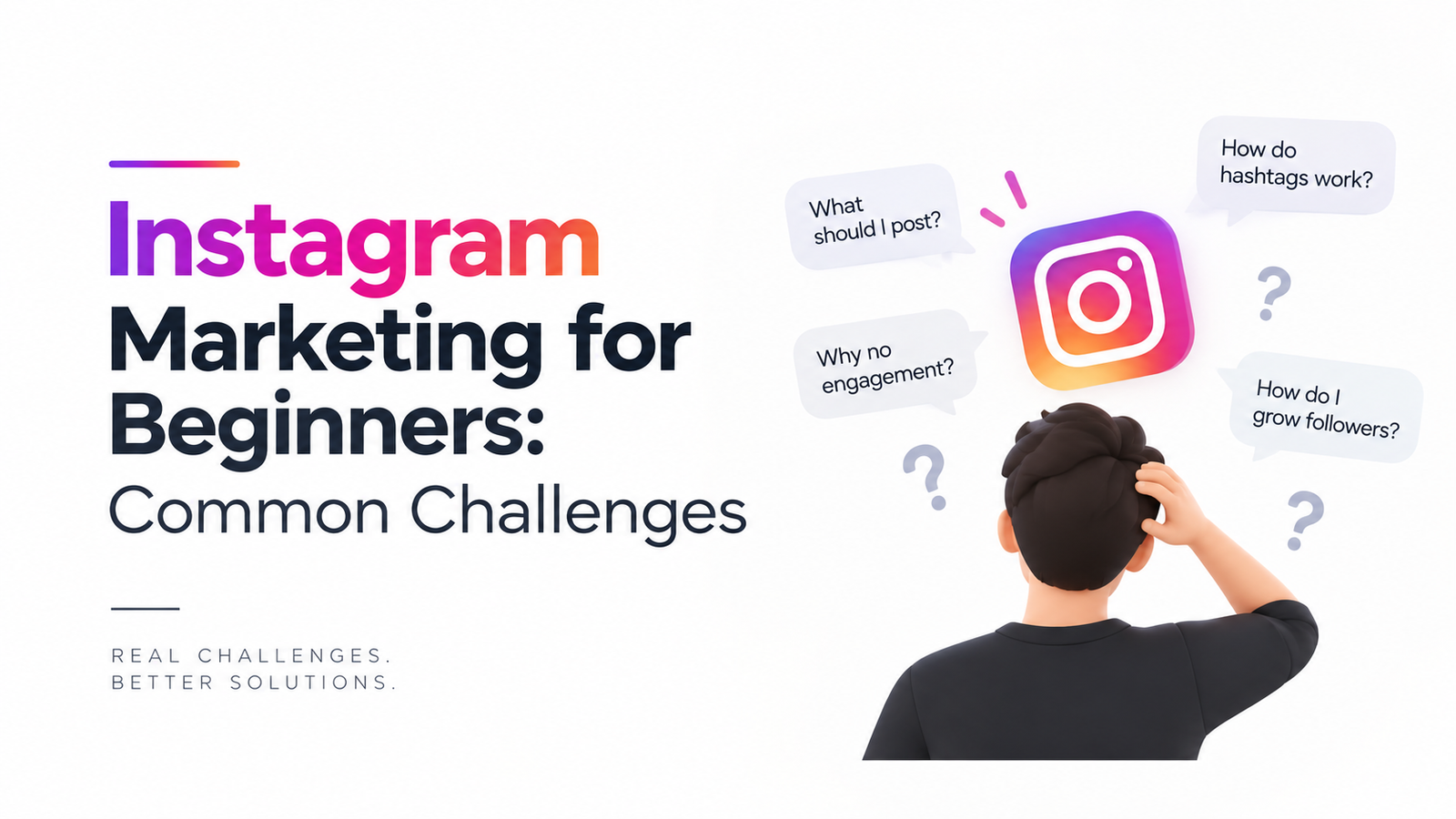
Beginners often struggle with questions like:
What should I post?
How often should I post?
Should I focus on Reels or images?
How do hashtags work?
How can I increase engagement?
Why are my followers not growing?
How can Instagram actually bring customers?
Should I use paid advertising?
These questions can make the platform feel overwhelming.
Another common problem is comparing a new account with established creators or businesses. You see accounts getting thousands of views and assume you are doing something wrong.
You probably aren’t.
Those accounts may have spent months or years understanding their audience, testing content, building trust, and developing their style.
A Little Empathy: Everyone Starts With Zero
Every successful Instagram account started somewhere.
At one point, there were no followers, no comments, and no viral posts.
That is important to remember when learning Instagram marketing for beginners.
Your initial posts might not get the response you were hoping for. Your first Reel may receive fewer views than expected. Some content ideas may completely fail.
That’s normal.
Instead of treating low reach as failure, treat it as information.
Maybe your topic wasn’t clear. Maybe the opening wasn’t interesting. Maybe the content was useful but poorly presented. Maybe the audience simply wasn’t active at that time.
Each post gives you another opportunity to understand your audience.
What You’ll Learn From This Guide Instagram Marketing for Beginners
A successful Instagram presence doesn’t require complicated strategies from day one.
You need a strong foundation.
In this guide to Instagram marketing for beginners, you’ll learn how to define your audience, optimize your profile, create content, use different Instagram formats, encourage engagement, understand basic analytics, and avoid common mistakes.
By the end, you should have a clearer idea of how to turn Instagram from a place where you simply post content into a platform that supports your goals.
Start by Defining Your Instagram Goal
First, determine what you want your Instagram account to help you accomplish.
Your goal could be:
Building personal brand awareness
Getting more website visitors
Generating leads
Selling products
Promoting a service
Building a community
Attracting potential employers
Establishing expertise in a particular field
Your goal affects the type of content you create.
For example, a freelance graphic designer may use Instagram to showcase previous projects and attract clients. A fitness creator may focus on educational videos and community engagement. A local restaurant may use food photography, Reels, customer content, and offers to encourage visits.
Don’t try to achieve everything immediately.
Choose one primary goal and create your content around it.
2. Understand Your Target Audience
A common mistake when starting out is making content without a specific audience in mind.
Your audience should be specific enough that you understand their interests, problems, and expectations.
Ask yourself:
Who am I trying to reach?
Then consider:
Age group
Location
Interests
Profession
Lifestyle
Common problems
Buying behavior
Questions they frequently ask
Content they already enjoy
For example, “Graduates from Kerala looking to build real-world digital marketing skills” is a more specific audience description.
When you understand your audience, content creation becomes easier because you know what conversations you should be joining.
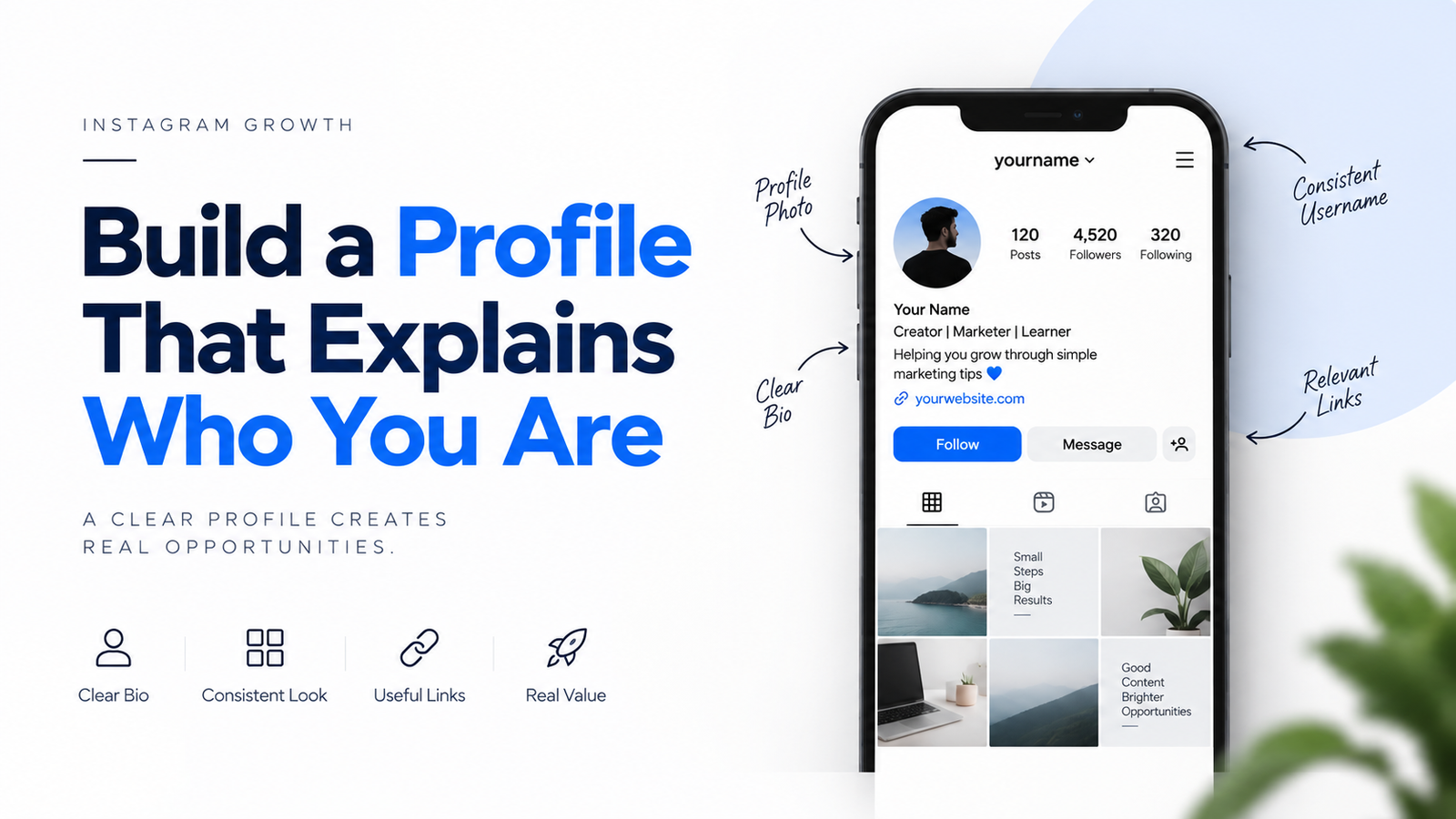
3. Build a Profile That Explains Who You Are
Your Instagram profile is often the first thing someone checks after discovering your content.
A good profile should quickly answer three questions:
Who are you?
What do you offer?
Why should someone follow you?
Start with a clear profile photo. For a personal brand, a professional and recognizable photograph can work well. For a business, use a clear brand logo.
Your username should be easy to remember.
Your bio should communicate your purpose without unnecessary words.
For example:
Helping small businesses improve their online presence
SEO | Social Media | Digital Marketing
DM for collaborations
You can also use the link section to direct visitors toward your website, portfolio, landing page, booking page, or other important resource.
4. Create Content Around Content Pillars
One reason Instagram content becomes difficult is that people don’t have a clear system.
Content pillars can solve that problem.
A content pillar is a broad topic that you regularly create content around.
For a digital marketer, pillars could include:
Educational Content
Share tips, explanations, tutorials, and practical information.
Behind-the-Scenes Content
Show your work process, workspace, projects, or daily activities.
Personal Content
Share experiences, lessons, opinions, or stories that help people connect with you.
Social Proof
Show testimonials, results, completed projects, reviews, or customer experiences.
Promotional Content
Talk about your products, services, offers, or upcoming events.
Having several pillars gives you variety without making your content directionless.
5. Use Instagram Reels to Share Short-Form Content
Reels have become a popular way to attract attention and connect with Instagram users.
They provide an opportunity to reach people who don’t already follow you.
But creating Reels doesn’t mean you need expensive equipment.
A smartphone, good lighting, clear audio, and a useful idea can be enough to get started.
Try different formats:
Quick tutorials
Step-by-step explanations
Before-and-after videos
Common mistakes
Frequently asked questions
Short educational tips
Behind-the-scenes clips
Product demonstrations
Story-based videos
The first few seconds matter.
Instead of starting with a long introduction, get directly into the topic.
For example, rather than saying:
“Hi everyone, welcome back to my page…”
Try:
“Your Instagram reach seems low? Start by checking these three common mistakes.”
The second approach immediately gives viewers a reason to continue watching.
6. Don’t Ignore Instagram Stories
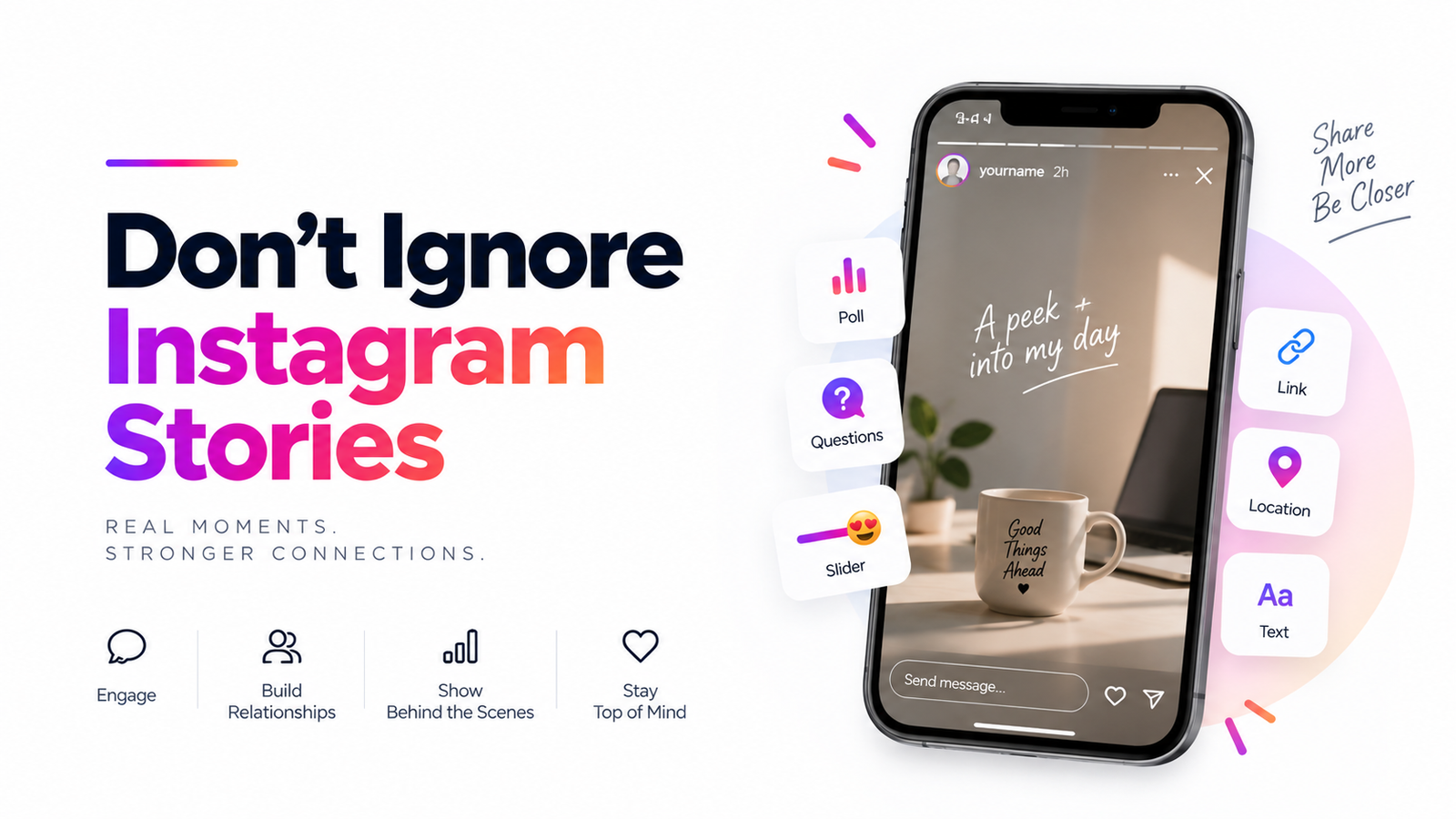
Reels may help you reach new people, but Stories can help you stay connected with your existing audience.
Stories are useful for more casual and frequent content.
You can share:
Daily updates
Polls
Questions
Quick tips
Behind-the-scenes moments
Product updates
Customer feedback
Announcements
Limited-time offers
Stories also provide simple ways to encourage interaction.
Instead of always asking people to “like and follow,” ask questions that are easy to answer.
For example:
What kind of content would be useful for you next?
A simple question can start a conversation.
7. Write Captions That Sound Human
Good Instagram marketing for beginners isn’t about filling captions with complicated marketing language.
Write the way you would speak to another person.
A useful caption can follow a simple structure:
Opening Hook → Key Insight → Practical Example → Audience Prompt
Start with something that creates curiosity.
Then explain the idea clearly.
Give a practical example where possible.
Finally, encourage the reader to take one simple action.
For example:
If your posts aren’t receiving much interaction, the issue may not be your account itself.
Look at the content first.
Are you answering a question your audience actually has?
Try creating your next three posts around common questions from your customers.
Which Instagram problem are you struggling with right now?”
This feels more natural than stuffing the caption with keywords and promotional phrases.
8. Make Engagement Part of Your Routine
Instagram isn’t only a publishing platform.
It is also a social platform.
If you only post content and disappear, you’re missing an important part of building relationships.
Spend time responding to comments and messages.
Engage with relevant accounts in your industry.
Leave meaningful comments instead of generic responses such as “Nice post!”
For example, if someone shares a useful SEO tip, you could add your own relevant observation or experience.
Genuine interaction takes time, but it helps create a stronger connection with your audience.
9. Use Hashtags Carefully
Hashtags can help categorize your content and make it easier for people to discover relevant posts.
However, adding a huge collection of unrelated hashtags isn’t a strategy.
Choose hashtags that are relevant to:
Your topic
Your industry
Your location
Your target audience
The specific content you’re publishing
For example, a Kochi-based digital marketer could combine industry-related and location-specific terms instead of using only extremely broad hashtags.
The goal is relevance, not simply quantity.
10. Learn From Instagram Analytics
You don’t need to become a data analyst to understand Instagram Insights.
Start by watching a few basic metrics:
Reach: How many people saw your content?
Views: Shows how often people viewed your published content.
Engagement: How many interactions did it receive?
Profile activity: Did people visit your profile after seeing your content?
Link clicks: Shows how many people clicked the link to explore further.
Look for patterns.
If educational Reels consistently perform better than promotional posts, that tells you something.
If certain topics generate more comments, explore those topics further.
Instagram marketing for beginners becomes much easier when you stop guessing and start learning from your own content data.
11. Create a Simple Posting Routine
You don’t need to publish content every day just because someone online told you that you must.
Consistency matters, but sustainability matters too.
A beginner-friendly schedule might include:
2–3 Reels each week
1–2 educational or carousel posts
Regular Stories
Time for community engagement
A weekly review of analytics
The exact schedule can change depending on your time and resources.
A practical schedule that fits your routine is easier to follow over the long term..
Posting five times in one week and disappearing for the next month makes it harder to build momentum.
12. Use Examples to Understand the Strategy
Imagine you are a freelance photographer.
Instead of posting only finished photographs, you could create content showing how you prepare for a shoot, explain simple photography tips, share editing transformations, answer common client questions, and showcase testimonials.
Now imagine you own a small clothing business.
Your content could include product styling ideas, new arrivals, customer photos, behind-the-scenes content, care tips, and short videos showing different ways to style the same product.
In both examples, Instagram becomes more than a product showcase.
It becomes a place where potential customers can learn, explore, and develop trust.
Practical Tips for Better Instagram Marketing for Beginners
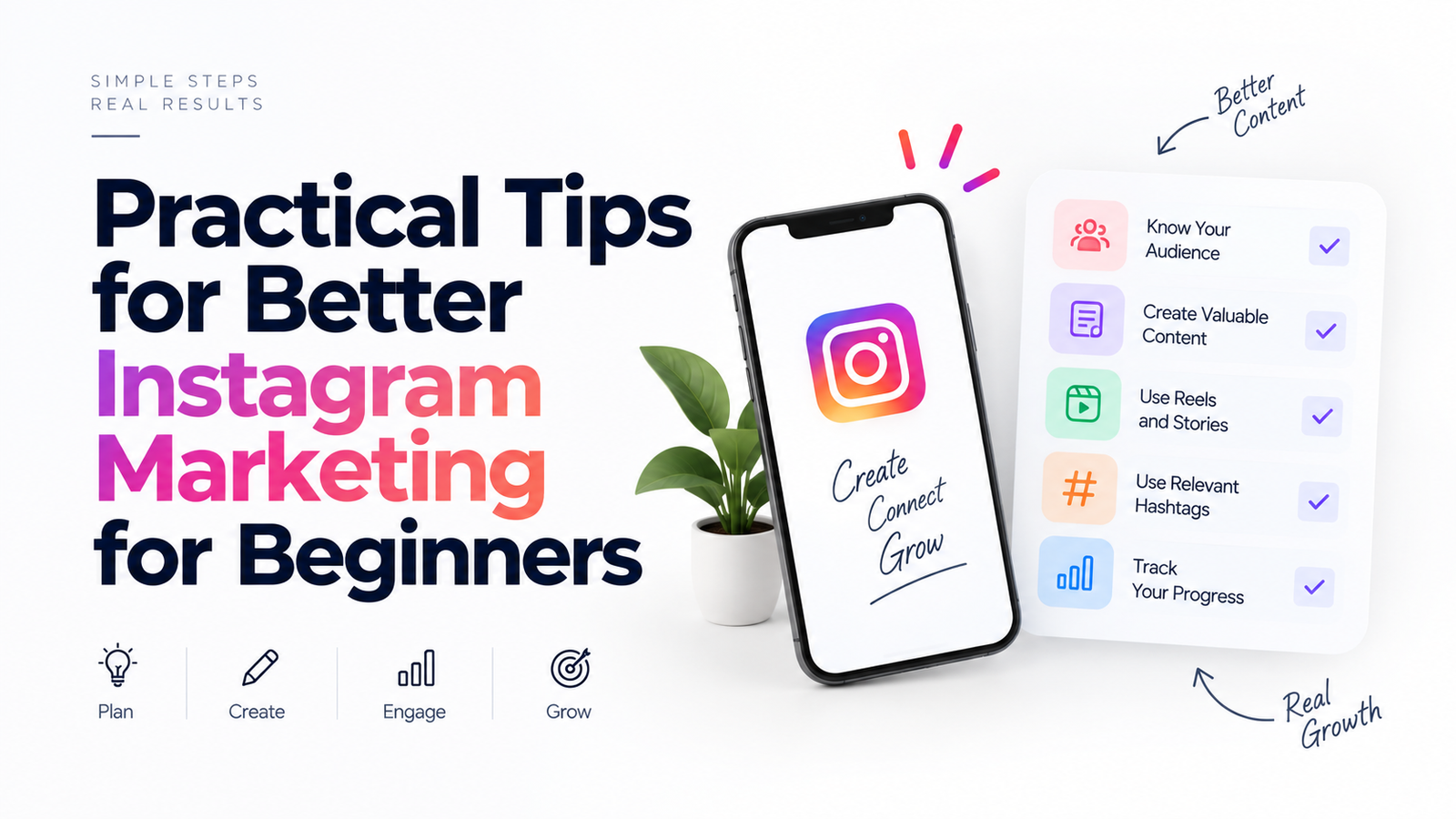
Keep Your Visual Style Consistent
You don’t need identical designs for every post.
However, maintaining a recognizable visual style can make your profile feel more organized.
Focus on Value Before Promotion
If most of your content is focused on selling, your followers may start looking for more useful or engaging posts elsewhere.
Teach, entertain, inspire, and connect before constantly selling.
Repurpose Good Ideas
A successful Reel can become a carousel.
Common questions from your audience can easily be turned into Story content.
Turn common customer queries into quick, informative video content.
One good idea can create several pieces of content.
Test Different Formats
Don’t decide that Reels, carousels, or Stories “don’t work” based on one post.
Experiment with different topics, formats, hooks, and presentation styles.
Make Your Calls to Action Simple
Instead of asking people to do five things, choose one.
Examples include:
Save this for later.
Share this with someone who needs it.
Comment your experience.
Send me a message to learn more.
Simple CTAs are easier to understand and act upon.
Common Mistakes Instagram Marketing for Beginners Should Avoid
Posting Without a Clear Purpose
If your posts cover unrelated topics, it can be harder to build a clear identity for your Instagram page.
Copying Other Creators
It’s fine to study successful content, but copying someone else’s style completely can make your account feel generic.
Learn from formats and ideas while developing your own voice.
Focusing Only on Followers
The number of followers alone doesn’t tell you how well your Instagram account is performing.
A modest but engaged following can create stronger connections than a large audience that rarely interacts.
Making Every Post Promotional
People don’t open Instagram because they want to see advertisements all day.
Give them useful or interesting content too.
Giving Up Too Early
Some posts will perform poorly.
One underperforming post isn’t enough to judge whether your strategy is working.
Look for patterns over time instead of judging your account based on one post.
Ignoring Comments and Messages
If someone takes the time to interact with your content, responding can help turn a simple interaction into a relationship.
Using Clickbait Without Delivering Value
An interesting hook can attract attention, but the content needs to fulfill the promise.
Otherwise, viewers may lose trust.
Summary: Keep Your Strategy Simple
Instagram can look complicated when you see creators discussing algorithms, hashtags, viral hooks, engagement rates, advertising, and content strategies.
There’s no need to learn every aspect of Instagram all at once..
Start with the basics.
Define your goal. Understand your audience. Optimize your profile. Choose a few content pillars. Create useful content. Experiment with Reels and Stories. Engage with people. Review your analytics. Take the lessons from your results and use them to shape your next steps.
These basic steps give beginners a practical starting point for building an Instagram presence.
Most importantly, don’t wait until everything is perfect before you start.
Your first piece of content doesn’t have to set the standard for everything that follows.
It only needs to mark the beginning of your journey.
Conclusion: Start Small, Learn, and Improve
Instagram marketing for beginners becomes easier when you stop treating it as a race for followers and start treating it as a process of building relationships.
Your audience wants useful information, relatable experiences, entertaining content, solutions to problems, and reasons to trust you.
Give them those things consistently.
You may not see dramatic results immediately. That’s okay.
Pay attention to what people respond to. Improve your content. Experiment with different formats. Learn from your analytics. Most importantly, keep creating.
With the right direction and steady work, your Instagram presence can support your wider business goals. It can become a valuable channel for building your personal brand, growing a business, generating leads, and connecting with the right people.
Ready to Start?
If you’re completely new to Instagram, don’t try to implement everything at once.
Choose your goal, define your audience, optimize your profile, and plan your first few pieces of content.
Then publish.
Learn.
Improve.
Repeat.
The real learning happens while you’re building your presence, not only after you achieve results. It’s while you’re building your presence one post at a time.
FAQs
Instagram Marketing for Beginners: Is It Good for Beginners?
Yes. Instagram provides several free content formats, making it possible for beginners to start building an audience without a large marketing budget.
How often should beginners post on Instagram?
There is no universal number. Start with a schedule you can maintain consistently, such as a few feed posts or Reels each week along with regular Stories.
Do I need a large following to make money on Instagram?
No. A smaller, relevant audience can still generate leads, sales, collaborations, or other opportunities when there is strong trust and engagement.
Are Instagram Reels important for Instagram Marketing for Beginners?
Reels can be useful for reaching people who don’t already follow your account. However, beginners should also experiment with Stories, carousels, and other formats.
How long does Instagram marketing take to work?
Results vary depending on the account, niche, content quality, consistency, audience, and goals. Building a meaningful presence usually requires ongoing testing and improvement rather than expecting immediate results.
Should I use paid Instagram ads?
Paid advertising can be useful when you have a clear objective, audience, offer, and landing experience. Beginners should first understand their organic content and target audience before spending heavily.
What should I post on Instagram as a beginner?
Start with educational content, common questions, behind-the-scenes posts, personal experiences, useful tips, demonstrations, and content related to your niche.