
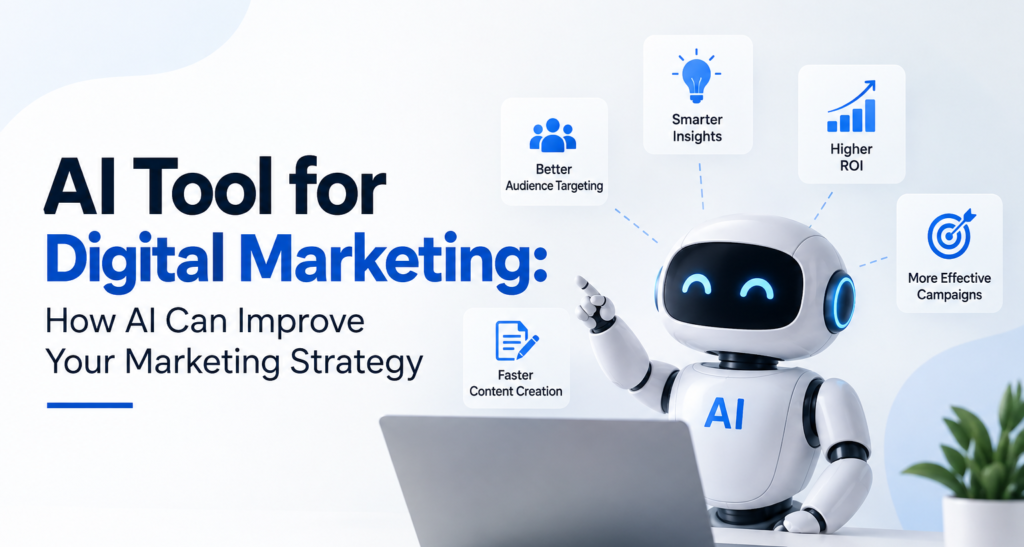
Digital marketing requires businesses to manage search engines, social media, email, websites, advertising, and customer data. Completing these tasks manually can take significant time and effort.
An AI tool for digital marketing helps simplify this work. AI can support keyword research, content creation, campaign analysis, email personalization, graphic design, advertising, and marketing automation.
However, AI should support marketing strategy rather than replace it. The best results come from combining AI efficiency with human creativity, experience, and decision-making.
For small businesses, freelancers, and marketing teams, the right AI tools can reduce repetitive work, improve consistency, and create more opportunities for growth.
Why Marketers Use AI Tool For Digital Marketing
Digital marketing includes many repetitive activities. Marketers may spend hours researching topics, writing social media posts, creating email variations, designing graphics, checking SEO performance, and reviewing campaign reports.
AI can speed up these processes. For example, one blog post can be transformed into social media captions, email content, video ideas, and advertising copy.
The main benefit is not simply producing more content. AI gives marketers more time to focus on customer needs, campaign strategy, testing, and business growth.
What Is an AI Tool for Digital Marketing?
An AI tool for digital marketing is software that uses artificial intelligence to assist with marketing tasks. It may help with SEO, content creation, social media, email campaigns, advertising, graphic design, customer segmentation, analytics, personalization, and automation.
Some tools focus on one specific area, while others combine several marketing functions. Semrush supports SEO, content planning, competitive research, and search visibility. Canva uses AI to help users create and edit marketing visuals. HubSpot combines AI with CRM, email marketing, automation, and lead management.
How AI Improves Digital Marketing
Faster Content Creation
AI can generate blog ideas, outlines, headlines, drafts, summaries, and content variations. It is especially useful when adapting one piece of content for multiple platforms.
For example, a fitness business could use AI to create ideas about beginner workouts. The marketer can then add advice from trainers, customer questions, and real business experience.
This process is faster than starting every piece of content from a blank page. However, AI-generated content should always be reviewed, edited, and customized before publication.
Better SEO Research
SEO involves understanding search intent, competitors, related topics, and content gaps. AI-powered SEO tools can organize large amounts of search data and help marketers identify useful opportunities.
They can assist with keyword research, content briefs, optimization suggestions, and competitor analysis.
Still, search volume should not be the only consideration. A keyword is valuable when it matches the audience and supports the business goal. Marketers must decide whether the topic is relevant and whether the searcher is likely to become a customer.
More Effective Social Media Content
Social media requires regular and platform-specific content. AI can generate caption ideas, content themes, hooks, campaign concepts, and short video scripts.
A company could use AI to turn a detailed home renovation guide into social posts, carousel ideas, video content, and email messages.
The marketer should then adjust each version for the platform. A LinkedIn post, Instagram caption, and short video script should not all use exactly the same style.
Faster Visual Content
Visuals are important for social media, advertising, presentations, and websites. AI-powered design tools can help businesses create graphics, edit images, resize designs, and produce marketing materials without advanced design skills.
This is useful for small businesses that do not have an in-house designer. Even so, AI-generated visuals should follow the company’s brand guidelines. Colors, fonts, images, and messaging should remain consistent so customers can easily recognize the brand.
Smarter Email Marketing
AI can help create subject lines, email drafts, personalized messages, and campaign variations. When connected to customer data, it can also support segmentation and behavior-based communication.
For example, new subscribers may receive educational content, while returning customers may receive product recommendations or special offers.
Personalization is most effective when it is based on useful customer information. Sending large numbers of generic AI-generated emails will not create strong engagement.
Best AI Tool for Digital Marketing
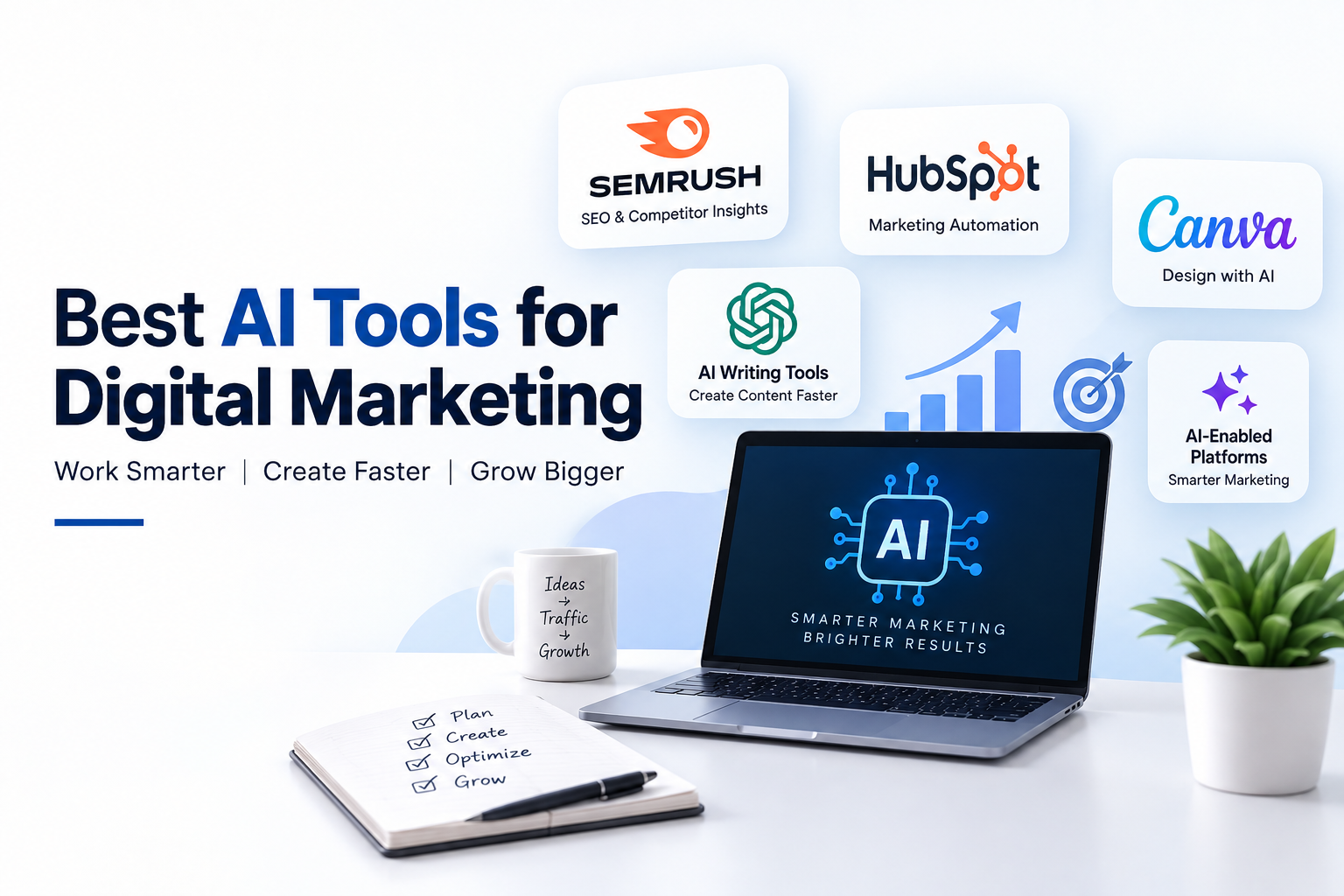
There is no single best AI tool for every business. The right choice depends on your marketing needs.
| Marketing Need | Example Tool | Best Use |
| SEO and keyword research | Semrush | Keyword research, content planning, SEO analysis |
| Marketing automation | HubSpot | CRM, email, campaigns, and lead management |
| Visual content | Canva | Social graphics, advertisements, and presentations |
| Content ideation | AI writing tools | Ideas, outlines, drafts, and repurposing |
| Analytics | AI-enabled platforms | Identifying patterns and explaining performance |
Avoid choosing tools simply because they include AI features. A small business may achieve better results with a few connected tools than with many separate platforms.
How to Choose the Right
AI Tool For Digital Marketing
Begin with your biggest marketing problem.
If content production is difficult, choose a tool that supports writing, research, and repurposing. If SEO is your priority, look for keyword data, competitor insights, technical analysis, and content optimization.
If your team spends too much time creating graphics, an AI design platform may be more useful.
Integration is also important. A tool that connects with your CRM, email platform, analytics system, or content management system can save more time than an isolated application.
Before purchasing a subscription, test whether the tool improves productivity, quality, or campaign performance.
Keeping the Human Side of Marketing
One common mistake is allowing AI to control the entire marketing process.
AI can create a reasonable article, advertisement, or email. However, reasonable content is not always memorable or persuasive. Human input adds personality, originality, experience, and trust.
A strong workflow is:
Human strategy → AI assistance → Human review → Testing → Optimization
The marketer defines the audience and campaign goal. AI helps generate ideas and variations. The marketer checks facts, adds original insights, adjusts the brand voice, and publishes the content. Performance data is then used to improve future campaigns.
This approach keeps AI as an assistant rather than treating it as a complete marketing department.
Common Mistakes When Using AI Tool For Digital Marketing
Publishing Without Editing
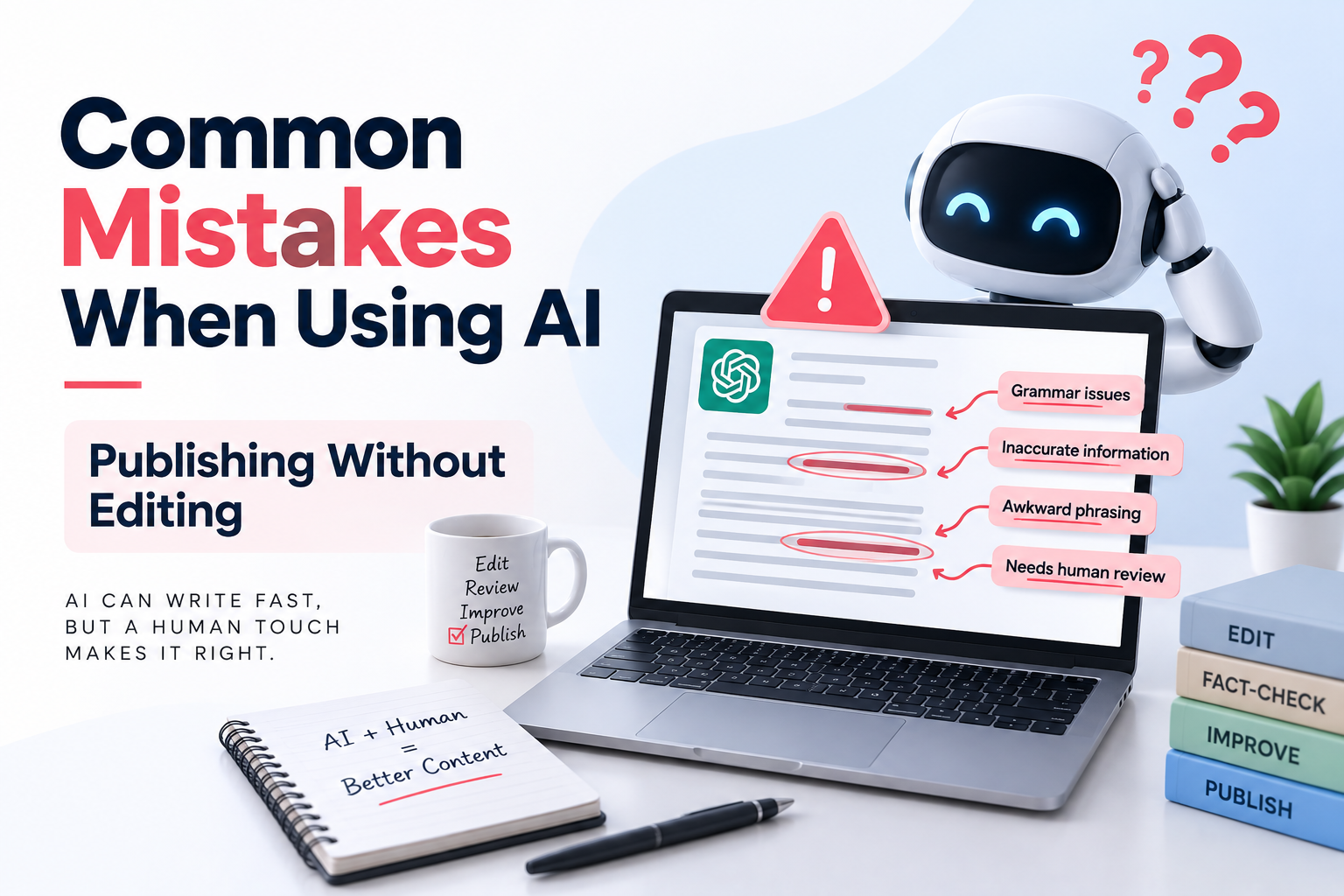
AI content may include inaccurate information, repetitive language, or generic advice. Always review important claims and add original examples.
Using Too Many Tools
Every new platform creates another subscription, workflow, and learning curve. Choose tools based on clear business needs.
Ignoring Brand Voice
AI-generated content can sound different from one piece to another. Create guidelines for tone, terminology, messaging, and customer communication.
Measuring Output Instead of Results
Publishing many posts does not guarantee success. Track meaningful metrics such as qualified leads, conversions, organic traffic, email engagement, and revenue.
Treating AI tool for digital marketing as a Strategy
AI can help execute a strategy, but it cannot replace customer research, positioning, business goals, or market understanding.
A Practical AI Marketing Workflow
A small business can begin with a simple monthly process.
First, research customer questions and relevant search topics. Use AI tool for digital marketing to organize these ideas into a content plan. Create a main article with human research and AI assistance, then repurpose it into social media posts and email content.
Use an AI design tool to create supporting visuals. Publish the campaign and track its performance.
At the end of the month, review which topics, formats, and channels produced the best results. Use those insights to plan the next campaign.
This creates a useful cycle:
Research → Create → Publish → Measure → Improve
Key Takeaways
AI is changing how marketers research, create, personalize, and measure campaigns. Its greatest advantage is reducing repetitive work and giving marketers more time for strategic decisions.
The best AI tool for digital marketing depends on your specific goal. Semrush may be useful for SEO, HubSpot for marketing automation, and Canva for visual content.
The most effective approach combines AI efficiency with human judgment. Use AI to accelerate marketing tasks, but use human insight to make the final work valuable, accurate, and relevant.
FAQ
What is the best AI tool for digital marketing?
The best tool depends on your goal. Semrush is useful for SEO, HubSpot supports marketing automation, and Canva helps create AI-assisted visual content.
Can AI replace digital marketers?
AI can automate repetitive tasks, but it cannot fully replace strategy, creativity, customer understanding, brand positioning, and human judgment.
How can small businesses use AI Tool For Digital Marketing ?
Small businesses can use AI for content ideas, SEO research, social media planning, email campaigns, advertising copy, customer segmentation, and visual content.
Is AI-generated content good for SEO?
AI content can support SEO when it is accurate, original, useful, and reviewed by a human. Generic content created only to increase volume is unlikely to perform well.
How much does an AI Tool For Digital Marketing Cost ?
Costs vary by platform and features. Some tools offer free plans, while advanced platforms charge based on users, automation, data, and usage. Compare the cost with the expected business value.
Conclusion
AI is not making digital marketing completely automatic. Instead, it is changing how marketers manage their time and resources.
The right AI tool for digital marketing can make research faster, simplify content creation, improve personalization, and help teams understand campaign performance.
However, technology alone does not create successful marketing. Businesses still need customer knowledge, original ideas, careful editing, and continuous testing.
Start with one marketing problem, choose one suitable tool, measure the results, and expand your AI workflow only when it creates real value.
Suggested Internal Links
- How to Improve Google Search Ranking
- How to Create an SEO-Friendly Blog
- What Is Search Intent in SEO?
- How to Use AI for SEO
- Best SEO Strategies for Small Businesses
Suggested External References
- Google Search Central — Official search guidance.
- HubSpot Marketing — Marketing automation and CRM tools.
- Semrush Marketing Platform — SEO and content tools.
- Canva Magic Studio — AI-assisted design features.
Author: Akshay